Atlantic spotted dolphin
Stenella frontalisG. Cuvier, 1829
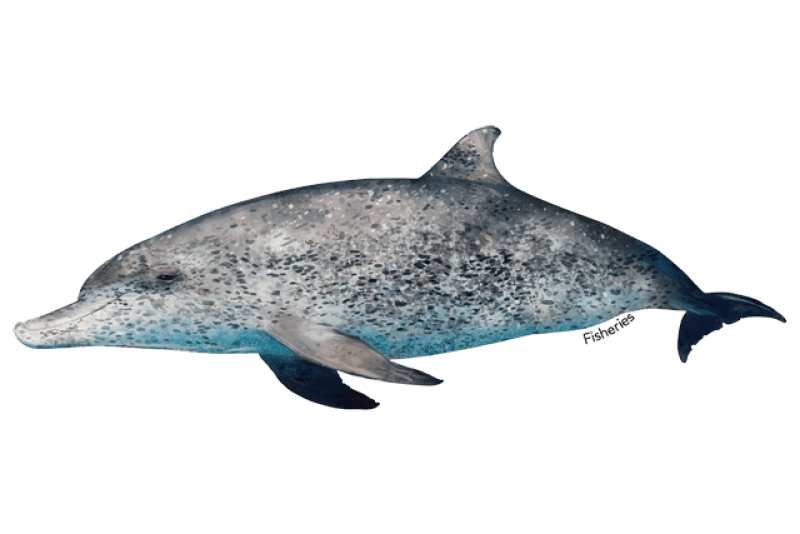
A playful summer visitor to the Azores and Madeira. Atlantic spotted dolphins are born without spots and become increasingly speckled as they age.
- Golfinho-pintado-do-atlântico
- Golfinho-malhado
Least Concern
IUCN Red List · global- LC
- NT
- VU
- EN
- CR
- EW
- EX
- EU Habitats Directive
- CITES II
- Bycatch
- Boat disturbance
- Pollution
01About the species
The Atlantic spotted dolphin is found only in the warm and tropical waters of the Atlantic Ocean. It is closely related to the pantropical spotted dolphin.
In Portugal it occurs mainly around the Azores and Madeira, where it arrives in large numbers in summer and early autumn when the water is warmest.
02Population status
The species is listed as Least Concern and is estimated to number hundreds of thousands across the Atlantic.
Around the Portuguese islands, it is one of the most commonly seen dolphins during the summer months.
03Appearance
Atlantic spotted dolphins are robust, with a moderately long, white-tipped beak and a tall, curved dorsal fin. A pale blaze often sweeps up from the flank towards the dorsal fin.
Calves are unspotted. Spots appear as they mature — dark spots on the pale belly and pale spots on the dark back — and some older adults are so heavily spotted they look almost white or black.
04Behaviour & diet
They feed on small fish, squid and bottom-dwelling invertebrates, often diving to 40–60 metres and sometimes much deeper.
They usually travel in groups of 5–50 and are fast, playful and acrobatic. They readily approach boats to bow-ride.
05Lifespan & reproduction
Atlantic spotted dolphins can live for up to around 50 years. Females reach maturity at around 8–15 years.
Gestation lasts about 11–12 months, and females give birth every three years or so.
06Threats
Bycatch in fishing gear is a threat in parts of their range. Intense dolphin-watching can disturb resting and feeding groups if not managed responsibly.
Pollutants accumulate in their tissues, as in other top predators.
- EU Habitats Directive — Annex IV
- CITES — Appendix II
07Scientific classification
- KingdomAnimalia
- PhylumChordata
- ClassMammalia
- OrderArtiodactyla
- InfraorderCetacea
- ParvorderOdontoceti
- FamilyDelphinidae
- GenusStenella
- SpeciesStenella frontalis
Spotted an atlantic spotted dolphin?
Every record helps researchers track populations along our coast.